
|
ezDICOM DICOM viewer |
| Index
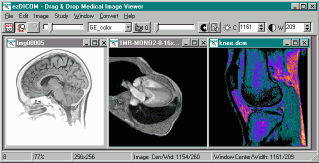
This software is designed to display most medical images: MRI, CT, X-ray, and ultrasound. All versions of ezDICOM can automatically detect the format of a medical image and display it on the screen. The ezDICOM project will appeal to several groups of people:
My DICOM page lists a large number of free DICOM viewers. So what are the benefits of ezDICOM? The main benefit is that the software is easy to use, mature (stable, few if any bugs) and can view a wide range of medical images including proprietary formats as well as images in the DICOM standard. For example, In addition, most free DICOM viewers only read a small subset of the DICOM images available, while ezDICOM can view a broad range of images. In addition to DICOM images, thesoftware will automatically recognize and display Analyze, GE (LX, Genesis), Interfile, Siemens (Magnetom, Somatom) and NEMA images. The greatest strength of ezDICOM is that it is free and open source. There are many variations of medical images 'in the wild' - many of these are poorly or incorrectly documented. By being free, ezDICOM has developed a wide user base, and this ensures the quality of the code. Thousands of people have used ezDICOM and sent in unusual and rare images, and the code is now mature and able to read virtually all the popular medical images. Therefore, the users are the most important strength of this software. It is important to acknowledge the many people who shared their images with the developers. The advantage of being open source is that programmers can modify and improve the code if they want. The project was started by Wolfgang Krug and has been expanded and maintained by Chris Rorden. Development was particularly aided by Earl F. Glynn's general programming tutorials and David Clunie's medical imaging FAQ. Special mention should also go to Jakob Scholbach (coauthored the lossless JPEG decoder), Armando Alaminos Bouza (Somatom formats), Yves Martel (various formats) and Sebastien Barre (useful suggestions). This software is covered by the BSD open source license. You can distribute both compiled projects and the source code. However, you should also distribute the license (the compiled standalone program makes this easy: the license is built into the 'about' window). The license also notes that the software is provided 'as is', use it at your own risk. This software attempts to reproduce medical images accurately. However, it is not designed for clinical use: computer monitors can vary tremendously in image quality. All grayscale images are rendered in 256-levels of gray (this is true of all of the viewers which I know of). |
| ezDICOM
for users Introduction. The standalone ezDICOM for windows program is a basic but useful tool for viewing medical images. This software will run on computers with Windows 95 or later and requires less than 300 Kb of disk space. To view an image, you simply drag and drop the image onto the program (or you can choose 'Open...' from the 'File' menu). Despite the ease of use, ezDICOM has a number of powerful features. For example, you can set the brightness and contrast of an image with great precision.You can also animate images that have multiple slices (e.g. see a heart beating over time or see different depths into the brain). Installation. To download the ezDICOM standalone application [version 1, release 24 ], shift+click here. The program is distributed as a compressed zip file - simply extract the files and double click on ezDICOM.exe. Delphi source code is also included. |
 Basic Instinct 1992 Remastered 720p 10bit Blu New [repack] -This paper examines the 1992 neo-noir erotic thriller film "Basic Instinct" directed by Paul Verhoeven, with a focus on its 2015 remastered 720p 10-bit Blu-ray release. The study evaluates the film's cinematic qualities, including direction, cinematography, and performances, as well as its technical aspects, such as picture and sound quality. The remastered Blu-ray release is analyzed in terms of its visual and auditory enhancements, and the impact on the overall viewing experience. If you need any more help or papers just let me know. In conclusion, the 2015 remastered 720p 10-bit Blu-ray release of "Basic Instinct" is a significant improvement over previous home video releases. The film's cinematic qualities, including direction, cinematography, and performances, are complemented by its enhanced technical aspects, such as picture and sound quality. This paper demonstrates the importance of film restoration and preservation, and the value of high-quality home video releases in promoting a deeper understanding and appreciation of classic films. basic instinct 1992 remastered 720p 10bit blu new "Basic Instinct" is a highly influential and iconic film that has become a staple of 1990s popular culture. The film's original release in 1992 was marked by controversy and debate, largely due to its explicit content and perceived promotion of violence and misogyny. Despite these criticisms, the film has maintained a significant following and continues to be studied by film scholars and enthusiasts. The 2015 remastered 720p 10-bit Blu-ray release offers a new opportunity to evaluate the film's technical and cinematic qualities in a modern context. The 2015 remastered 720p 10-bit Blu-ray release of "Basic Instinct" presents a significant improvement over the original DVD release. The increased resolution and bit depth result in a more detailed and nuanced image, with improved color accuracy and contrast. The film's sound design has also been enhanced, with a wider dynamic range and more immersive audio. This paper examines the 1992 neo-noir erotic thriller Verhoeven's direction and the cinematography of Jan de Bont are notable for their innovative use of camera angles, lighting, and composition. The film's use of close-ups, point-of-view shots, and long takes creates a sense of tension and intimacy, drawing the viewer into the world of the film. The performances of Sharon Stone and Michael Douglas are also noteworthy, bringing depth and complexity to their respective characters. An Analysis of the Cinematic and Technical Qualities of "Basic Instinct" (1992) in its 2015 Remastered 720p 10-bit Blu-ray Release If you need any more help or papers just let me know The remastered Blu-ray release of "Basic Instinct" offers a fresh perspective on the film's technical and cinematic qualities. The improved picture and sound quality enhance the overall viewing experience, allowing viewers to appreciate the film's craftsmanship and artistry in a new way. Furthermore, the remastered release provides an opportunity to reevaluate the film's cultural significance and influence, particularly in the context of contemporary debates around film restoration and preservation. |
| DCM2JPG console
application DCM2JPG is a simple command-line Windows program. If you drop a file on the program it will create a JPEG version of the file (alternatively, if you name the program 'dcm2png.exe' or 'dcm2bmp.exe' it will create PNG or BMP format images). You can also call the program from the command line, to do special functions like change the image brightness or contrast (most grayscale DICOM images have much higher precision than can be saved to standard bitmap formats). Another nice feature is the ability to create nice zoomed versions of DICOM images - e.g. save a 128x128 pixel image as a 192x192 pixel bitmap (scaling is done using a bilinear-interpolation method to reduce any jaggy edges). Both a compiled program and the (ezDICOM-based) source code can be downloaded by shift+clicking here. Here is a short overview of the commands: OPTIONS
EXAMPLE:
TRICKS:
|
| ezDICOM for
programmers The basic concept is that code for ezDICOM can be included in more complicated projects. A good example is Chris Rorden's MRIcro freeware. MRIcro includes a lot of powerful features that are useful for scientists studying the brain. The casual user will find MRIcro much more difficult to use than the basic ezDICOM, but specialist will appreciate MRIcro's additional features. There are actually three versions of ezDICOM available for programmers, depending on the computer language you use. In all cases, the source code is provided, so you can either use the software as a modular unit without needing to learn about any of the details of medical imaging, or you can modify how these components work.
|
 |