Adobe Genp ~upd~ 【2025-2027】

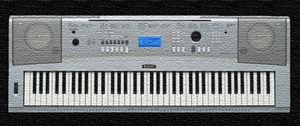
Yamaha DGX 220 Your Ad Here

Yamaha DGX "portable grand" is the most playful yamaha keyboard for different melodies and world styles. Enjoy using it.

full Yamaha styles


A admired arranger series from Yamaha, the Yamaha DGX grand piano keyboard series has keyboard instruments with more than 61 keys. The advanced models in this series come with 88 fully weighted piano action keys that feel more like a piano. These keyboards bring you the best of an arranger and a digital piano.

Though the Clavinova and the Arius pianos look and feel more like proper pianos, most music enthusiasts will find them quite expensive.

Whereas a Yamaha DGX keyboard is far more affordable as far as price is concerned. Yamaha DGX 230 and Yamaha DGX 640 are two keyboards in this series, one at the lower end and the other at the top of this series.

A typical Yamaha DGX grand piano keyboard is designed to be more portable, but some can still give you a decent workout. Weighted keys and bundled stand can be some of the reasons for making the keyboard a bit heavy.

Keyboard functions like several sounds, styles, and effects can be found on these DGX keyboards. You will also find features like USB to Device terminal, USB to Host terminal, pitch bend on some of these models.

Overall, the DGX keyboards give you the best of a digital piano and an arranger at a price that you cannot resist. These are any day more inspiring to practice upon than any other 61 key arrangers. So if all this sounds interesting, check out the 88 key Yamaha DGX grand piano keyboard today.


2-4
6-8
Ballad
Ballroom
Bigband
Classic
Country
Disco
Easy listening
Instruments
Jazz
Latin
Learning
Polka
Pop
R&B
Rock
Unsorted
World
Xmas


In this site you can download free yamaha styles from everywhere in the world. Unique collections of voices, midi, style files and registry information in the whole world.

Adobe Genp ~upd~ 【2025-2027】

There is color in the phrase. Picture adobe walls: warm, ochre, earthen; they hold heat and story, scars of rain and human hands. Now imagine the other half: genp—staccato, neon, vapor-trail. Together they form a hybrid: the tactile and ancient married to the sharp, synthesized edge of new tools. That juxtaposition is what draws the eye: an old vernacular of craft and place wrapped around a rapid, algorithmic heartbeat.

Aesthetic possibilities bloom. Imagine murals painted with pigments mixed by local hands, then reinterpreted by algorithms into endless variations—a thousand doorways—each one a conversation between human intent and machine permutation. The result can be dazzling: repetition braided with local idiosyncrasy, textures that echo fingers and code alike. Or it can feel hollow: algorithmic echoes without the sinew of context, like adobe façades with no village behind them. adobe genp

Adobes of memory, stacked like sunbaked bricks along the roadside of the mind—each one stamped with a tiny, luminous logo: genp. The term arrives like a found-object: part brand, part rumor, part shorthand for a technology that bent its way into common speech. In conversation and comment threads, “adobe genp” looks like a puzzle piece from a larger machine world—slick marketing fused with the jittery murmur of possibility. There is color in the phrase

Think about scale. An adobe hut is intimate and local; a generated pipeline—if that’s what genp hints at—is networked and expansive. The mind leaps to contradictions: the patient, regional rhythm of the adobe builder vs. the nimble, near-instant churn of generative processes. The phrase invites a story where artisans trade techniques with code, where the slow geometry of clay and sun meets the zero-latency instantaneity of models that imagine and iterate. Together they form a hybrid: the tactile and

There’s also a politics embedded in the compound. “Adobe” evokes creative labor, tools, and ecosystems; “genp” suggests automated production. That friction surfaces anxieties and ambitions alike: who keeps the craft when output is trivially reproducible? Who owns the pattern stamped into a digitally generated tile? The colors here are not just visual but ethical—shades of trust, agency, authorship. In that palette, bright innovation sits beside the dusk of uncertain livelihoods.

“Adobe genp” as a phrase is also a linguistic artifact—part mnemonic, part shorthand. It’s the sort of tag people slap on a trend to make it easier to talk about, to worry about, to celebrate. Language like this does social work: it simplifies complex chains of design, policy, dataset, and workflow into a badge you can put on a tweet. That compression is useful, but it also flattens nuance—so the colors of the original craft risk fading into a single corporate hue.

In short: “adobe genp” is a compact provocation—earthy and electric, ancestral and immediate. It asks us to look at how tools remap craft, how language captures trends, and how color—literal and moral—shifts when the old and the new are pressed together.